๐Ÿ‘จโ€๐ŸŽ“ About Me

Hi, I am Jinpeng Lu, a 2025-entry master's student in Information and Communication Engineering at the University of Science and Technology of China. I work with Prof. Zhiwei Xiong. Previously, I received my B.S. in Mathematics from Harbin Institute of Technology, Shenzhen.

My current research focuses on world-state consistency in video generation models, especially under multi-shot generation, viewpoint changes, and camera movement. I am also actively exploring VLMs and AI agents, with interest in how multimodal systems represent scenes, preserve state, and support reliable reasoning.

My work combines benchmark design, representation analysis, and efficient model engineering. In medical vision, this has meant building lightweight 3D segmentation systems and testing how visual foundation models transfer across modalities. In world-model, VLM, and agent-related research, I focus on diagnostics that make long-horizon state, spatial grounding, and behavior traces measurable rather than anecdotal.

๐Ÿ“ข๐Ÿ“ข I am currently exploring world-state consistency in video generation models, including multi-shot scenarios and camera motion, while actively expanding into VLMs and AI agents.

  • Open benchmark WRBench D1-D6 diagnostics ยท project page ยท HF artifacts ยท leaderboard
  • First-author papers ICLR 2026 ยท MICCAI 2024 ยท world-model diagnostics
  • Engineering base PyTorch ยท CUDA ยท evaluation pipelines ยท 3D perception

๐Ÿ”ฅ News

๐Ÿ“˜ Selected Publications

Full list: Google Scholar Google Scholar citations: 98 h-index 4 ยท i10-index 3

๐ŸŒ World Model

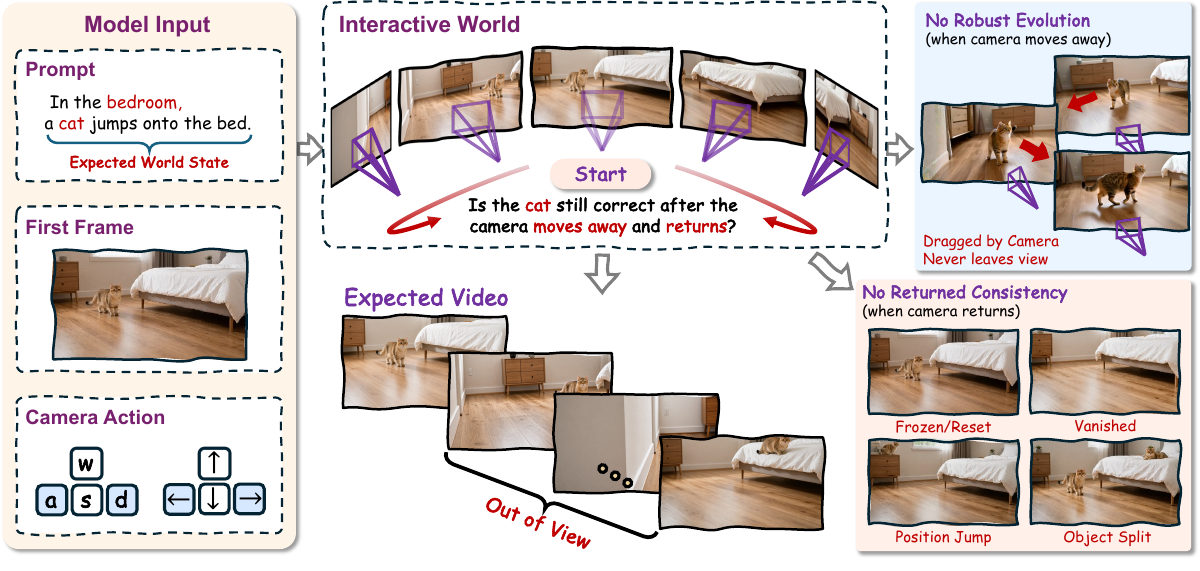
arXiv 2026 WRBench source figure showing viewpoint intervention and returned-state evidence
First Author 2026.06

Current World Models Lack a Persistent State Core

J. Lu, D. Zhu, H. Shi, L. Cai, G. Tang, Y. Chen, J. Cao, D. Tang, Y. Zhang, Y. Dai, X. Ju.

  • Task: Evaluate whether video generation world models can preserve dynamic scene state across viewpoint changes, multi-shot observation, and camera movement.
  • Method: Build WRBench as a D1-D6 diagnostic protocol with camera-observability interventions, re-observation cases, public artifacts, and leaderboard-style evaluation.
  • Result: Shows that current world models often fail to maintain a persistent state core, making returned-state consistency measurable instead of anecdotal.

๐Ÿง  VLM & VLA Representation Learning

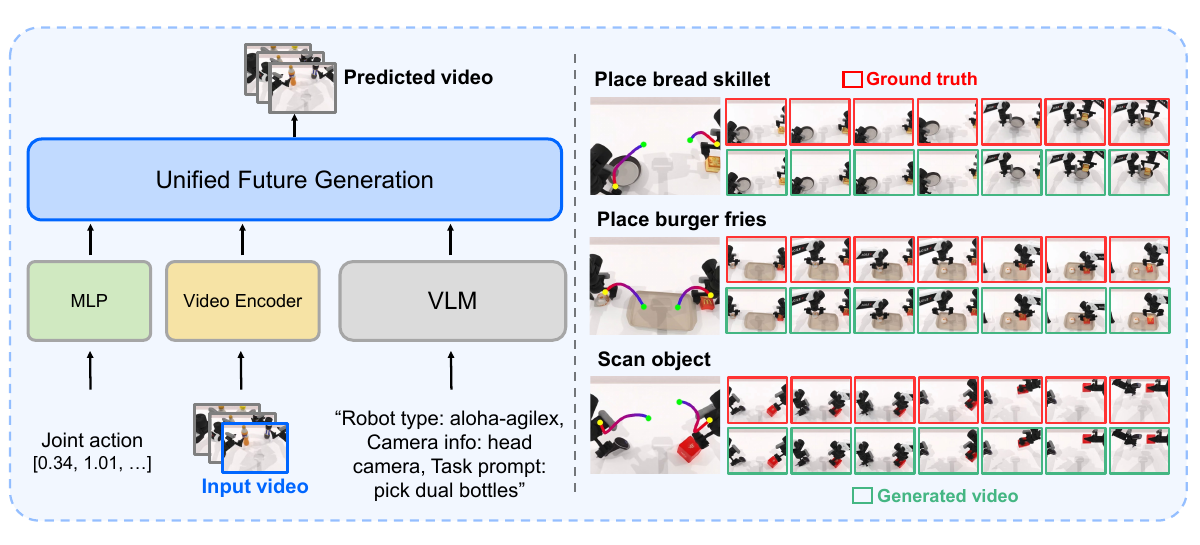
arXiv 2026 Pelican-Unify source figure showing embodied intelligence model components
Contributor 2026.06

Pelican-Unify 1.0: A Unified Embodied Intelligence Model

  • Task: Support a unified embodied-intelligence model that connects perception, reasoning, future prediction, and action generation.
  • Method: Contribute to the model loop and evaluation framing around scene understanding, task reasoning, future imagination, and action prediction.
  • Result: Helps organize embodied AI capabilities into a single pipeline for studying how multimodal representations drive downstream behavior.

๐Ÿฅ Medical Vision Foundation Models

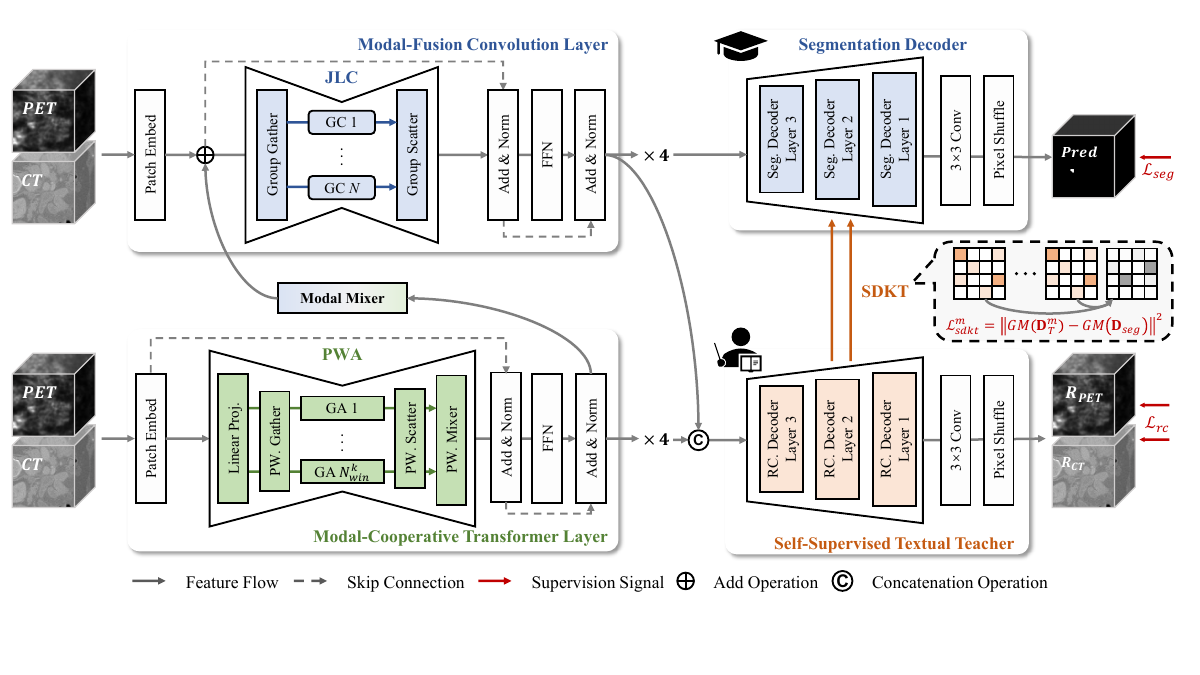
ICLR 2026 VeloxSeg overview source figure
First Author CCF A 2026.01

Johnson-Lindenstrauss Lemma Guided Network for Efficient 3D Medical Segmentation

J. Lu, L. Cai, Y. Chen, G. Tang, S. Jiang, H. Shi, Z. Xiong.

  • Task: Perform efficient multimodal 3D medical segmentation for volumetric PET/CT perception.
  • Method: Combine JL-guided convolution, paired window attention, and spatially decoupled knowledge transfer in VeloxSeg.
  • Result: Delivers a 1.66M-parameter segmentation model that keeps the architecture lightweight for 3D medical-image analysis.
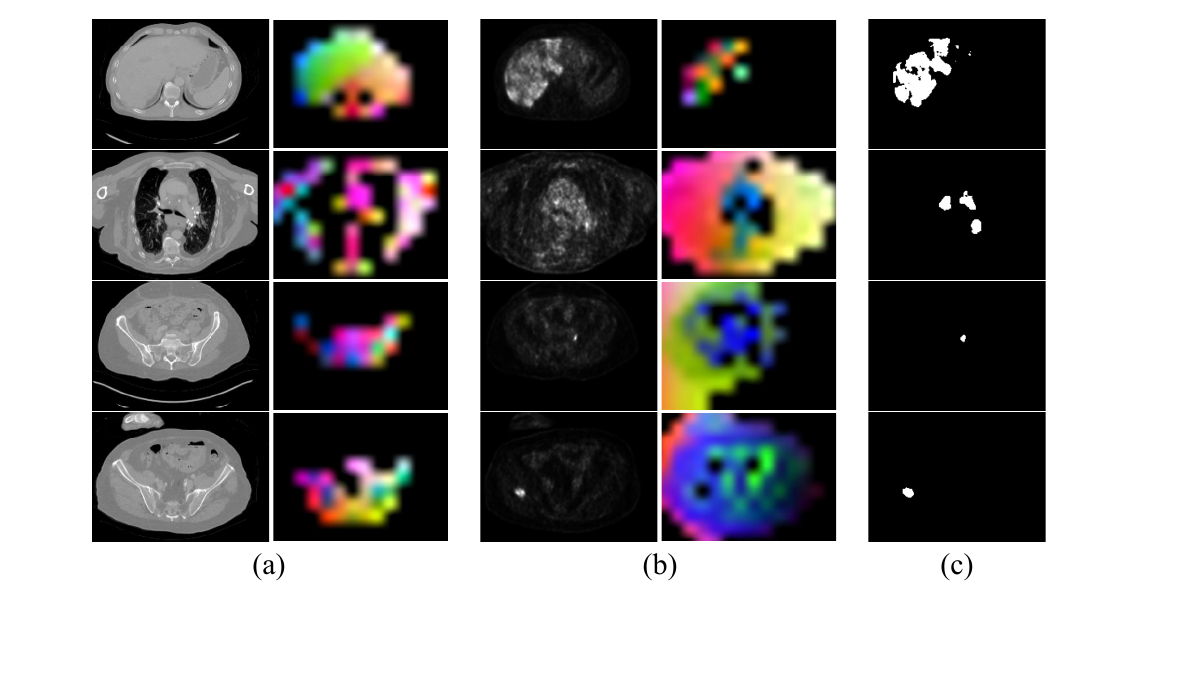
Tech Report 2025 DINOv3 PET/CT feature source figure
Co-first Author 2025.10

Does DINOv3 Set a New Medical Vision Standard?

C. Liu*, Y. Chen*, H. Shi*, J. Lu*, B. Jian*, J. Pan*, L. Cai*, et al.

  • Task: Test whether DINOv3-style self-supervised visual features transfer reliably to medical vision tasks.
  • Method: Benchmark 2D and 3D classification, segmentation, and registration across multiple medical modalities.
  • Result: Identifies where transfer is useful, where task limits remain, and which modality gaps matter for medical foundation-model use.
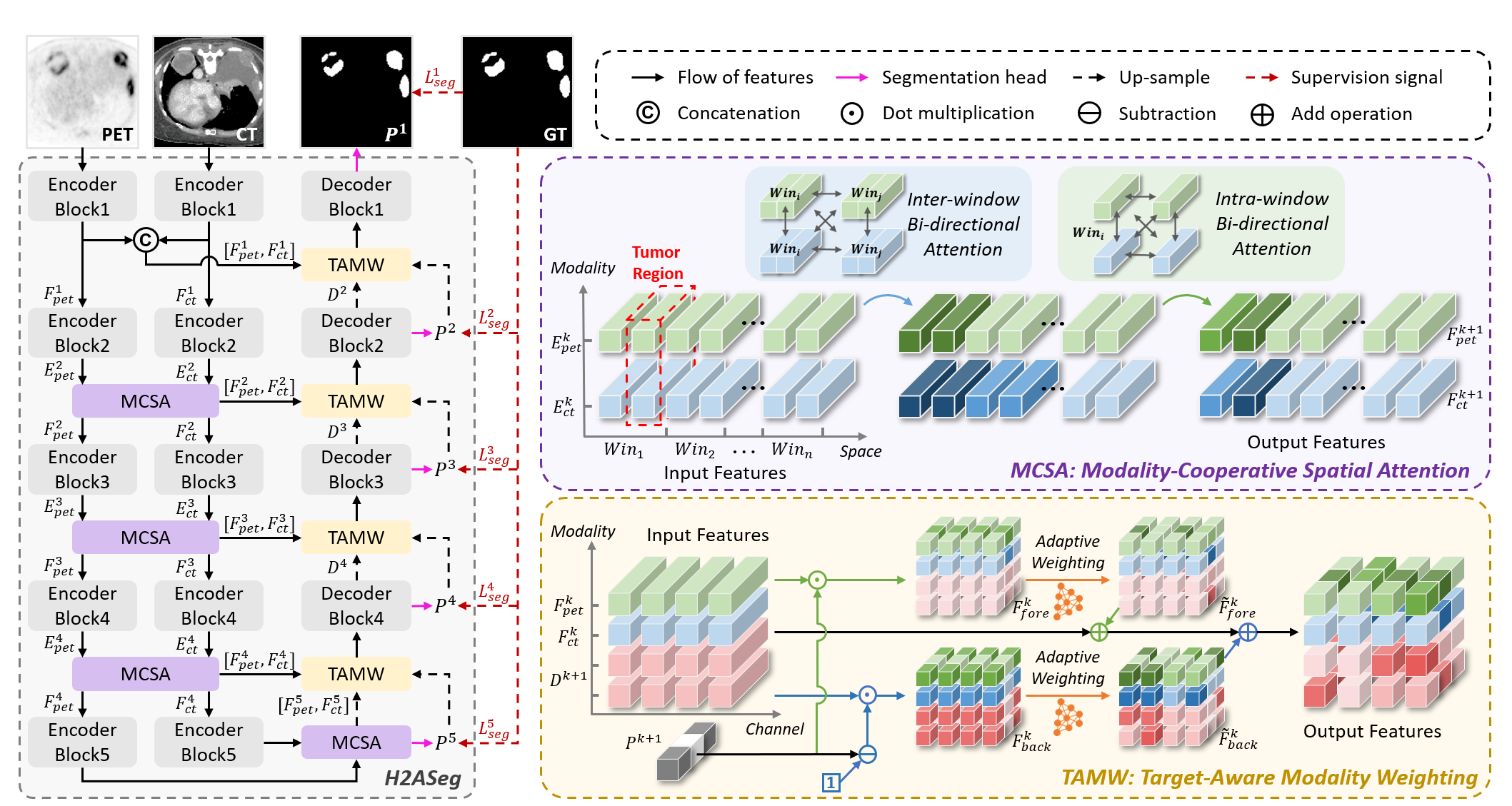
MICCAI 2024 H2ASeg source figure showing PET/CT hierarchical adaptive interaction architecture
First Author CCF B 2024.03

H2ASeg: Hierarchical Adaptive Interaction and Weighting Network for Tumor Segmentation in PET/CT Images

J. Lu, J. Chen, L. Cai, S. Jiang, Y. Zhang.

  • Task: Segment tumor regions in paired PET/CT images under heterogeneous lesion appearance and modality imbalance.
  • Method: Use hierarchical adaptive interaction and weighting to fuse PET metabolic cues with CT anatomical structure.
  • Result: Improves robust lesion-region segmentation and establishes the medical-segmentation line that later led to VeloxSeg.

Additional Medical AI Publications

๐Ÿ”ฌ Research

Current interests organized around world models, representation learning, and medical vision foundation models.

๐ŸŒ World Model

Dynamic world-state diagnostics under viewpoint changes.

I study whether video generation systems maintain coherent dynamic world states under viewpoint changes. In WRBench, camera motion is treated as an observability intervention, and the D1-D6 diagnostic chain separates camera execution, visual integrity, visible spatial/state consistency, re-observation support, and returned spatial/state consistency.

Returned-state evidence is a key diagnostic stage rather than the whole benchmark identity. This line focuses on benchmark design, human-calibrated evaluation, public artifact release, and failure analysis across model families, camera-control interfaces, and long-horizon visual consistency.

๐Ÿง  VLM & VLA Representation Learning

Video-language representations, action routing, and behavior tracing.

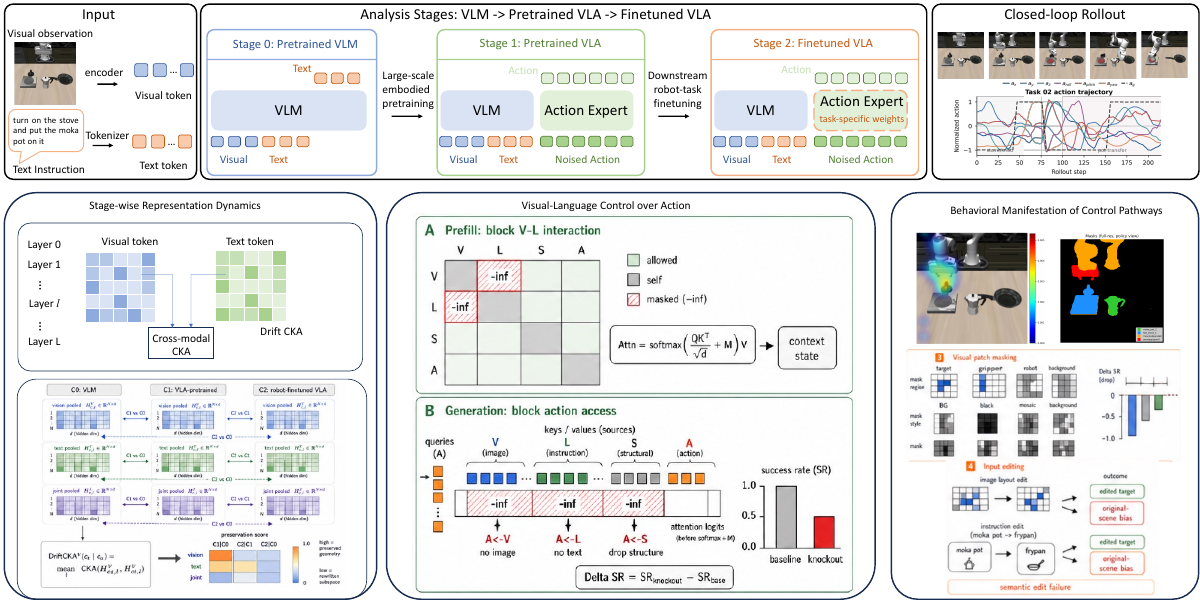
I am interested in how multimodal representations become embodied behavior. Recent contributor projects such as Pelican-Unify and VLA-Trace help connect scene understanding, reasoning, future imagination, action prediction, and rollout-level behavior.

The goal is to make VLA and embodied foundation models more inspectable: where task evidence appears, how it propagates, and when it fails to control action.

๐Ÿฅ Medical Vision Foundation Models

Efficient 3D perception, multimodal segmentation, and transfer limits.

My earlier work develops efficient and robust segmentation methods for PET/CT and 3D medical images. In VeloxSeg, I combine JL-guided convolution, paired window attention, and spatially decoupled knowledge transfer for lightweight multimodal 3D segmentation.

I also study transfer limits of visual foundation models in medicine, including DINOv3-style self-supervised features across 2D/3D classification, segmentation, and registration tasks.

๐ŸŽ“ Education

2025.09 - 2028.06

University of Science and Technology of China

M.S. in Information and Communication Engineering. Advisor: Prof. Zhiwei Xiong.

๐Ÿ› ๏ธ Methods / Engineering Profile

Evaluation Design

I build diagnostic benchmarks and protocols that separate task setup, observable evidence, judgeability, and model failure modes, especially for world models and embodied multimodal systems.

Model Engineering

I design efficient 3D perception modules, multimodal fusion blocks, and representation analyses in PyTorch/CUDA, with ablations tied to the specific behavior being measured.

Reproducible Systems

I maintain experiment pipelines, artifact releases, leaderboards, and data-processing workflows with Linux, Git, Docker, Shell/Bash, LaTeX, and experiment tracking tools.

๐Ÿ‘ฃ Site Visitors

Approximate visitor map and page-view counter.

Approximate Location

Approximate location: loading...

Location is estimated from public IP geolocation and may be imprecise; this page does not display your raw IP address.

Visitor map and counter powered by Flag Counter